IMÁGENES DE APOYO
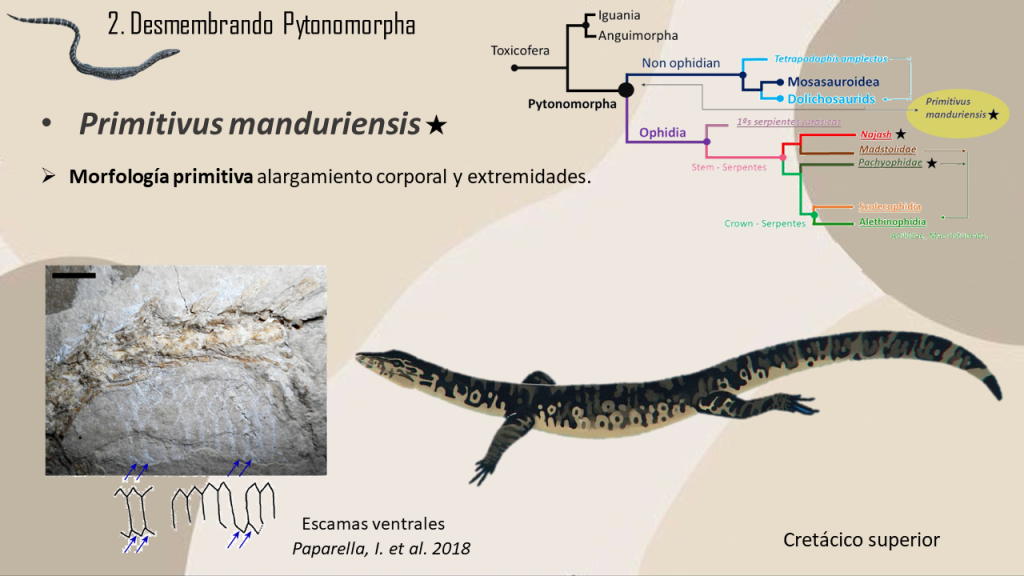
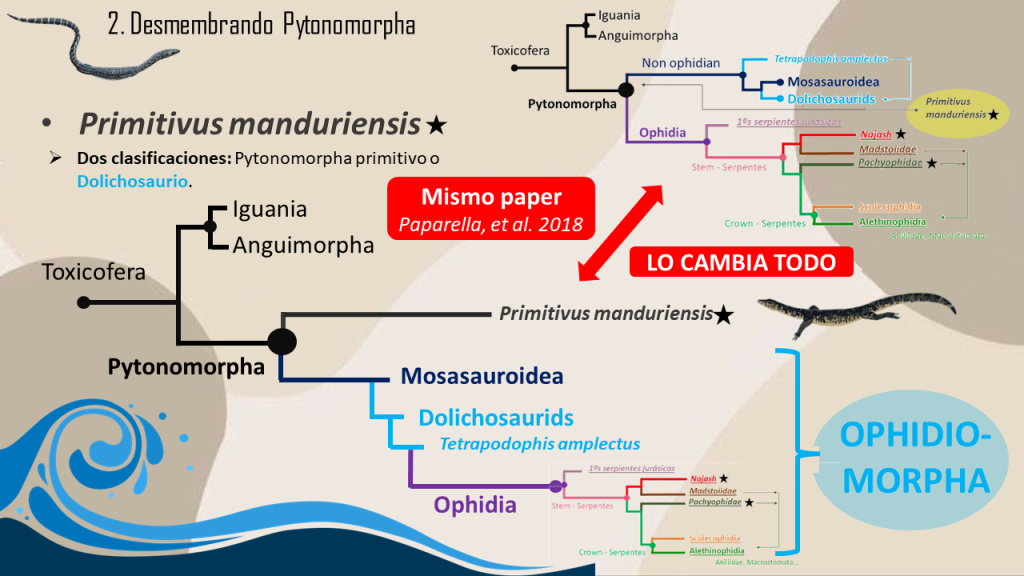
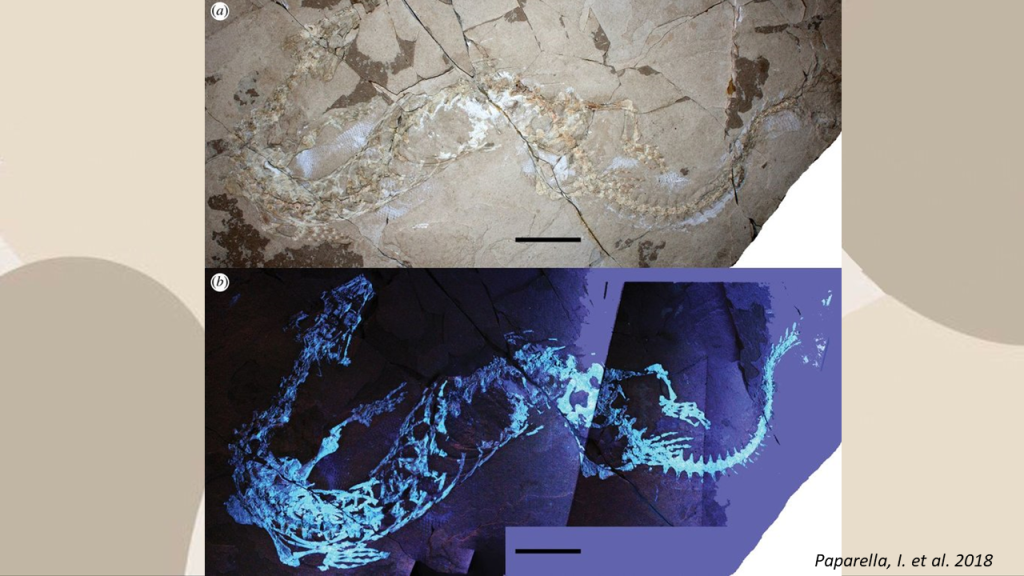
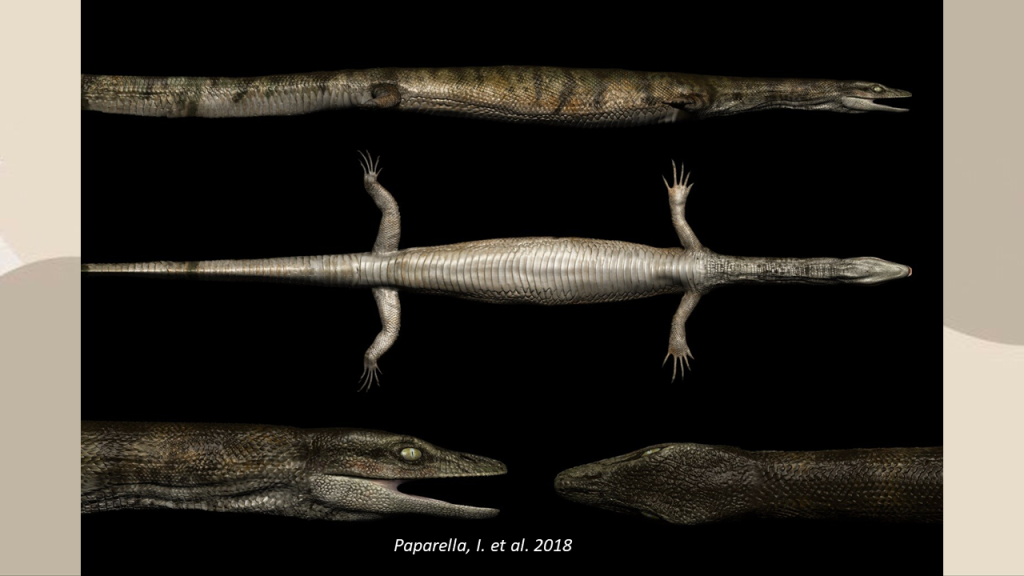
Primitivus manduriensis
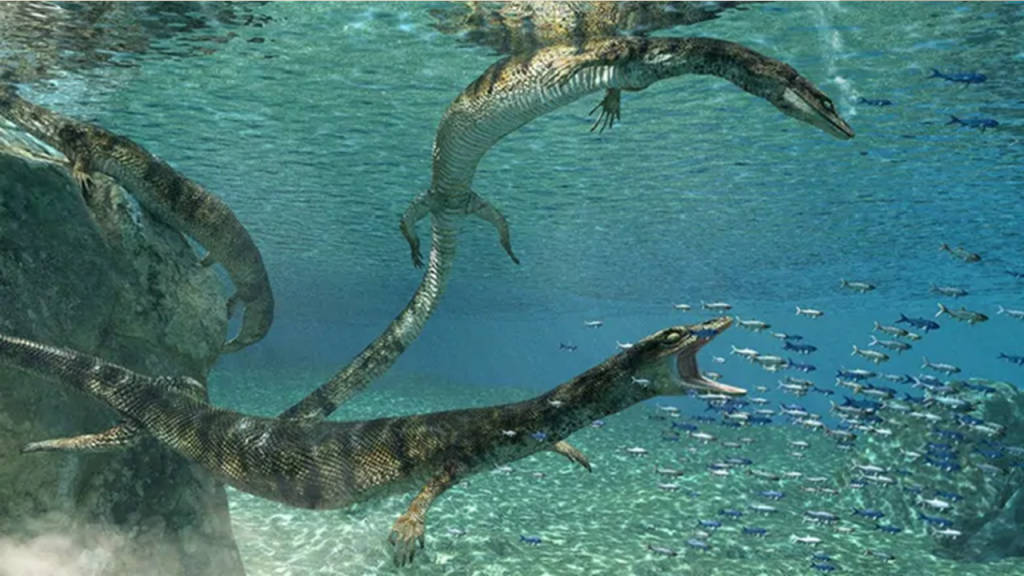
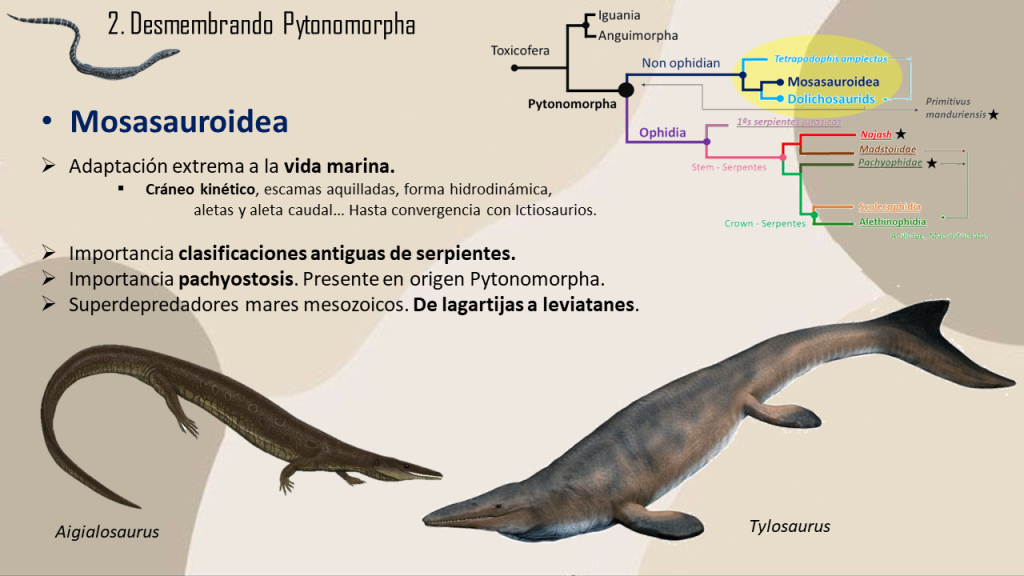
Mosasauroidea
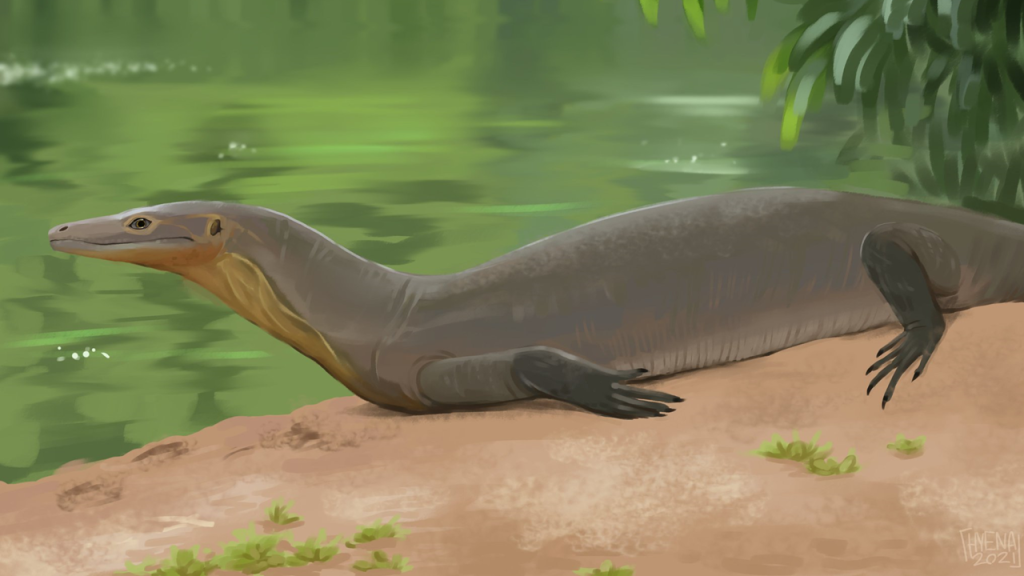
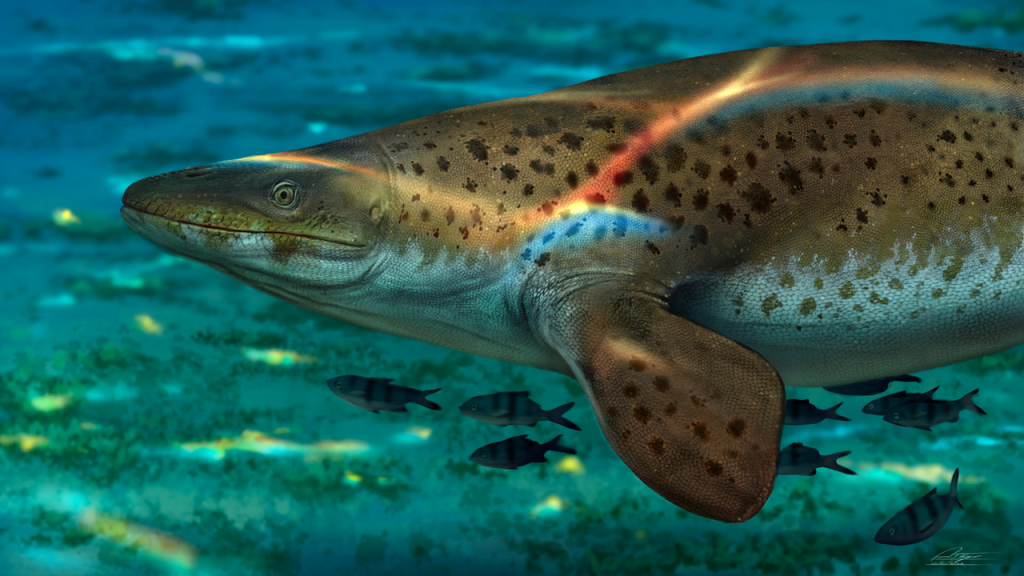
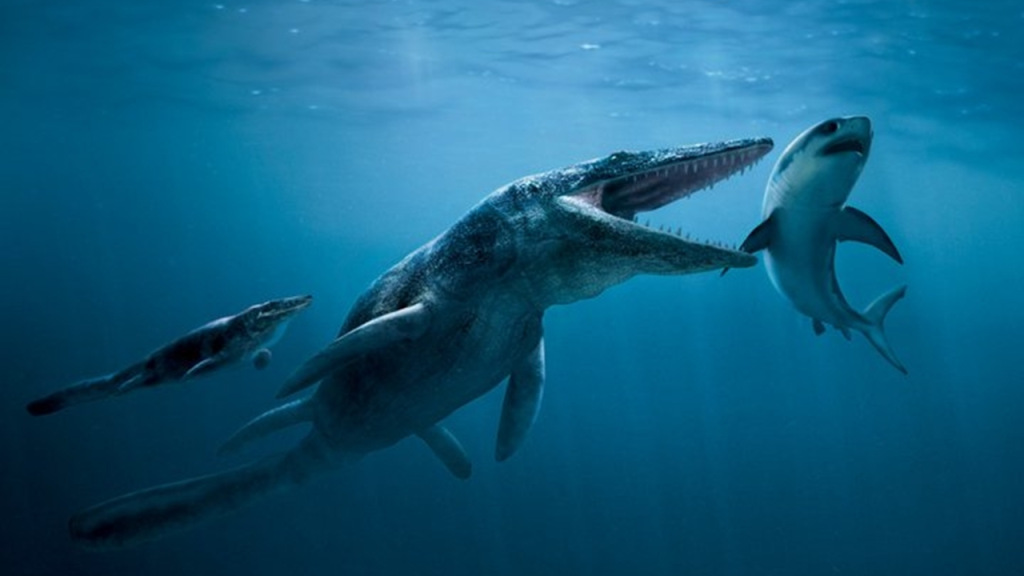
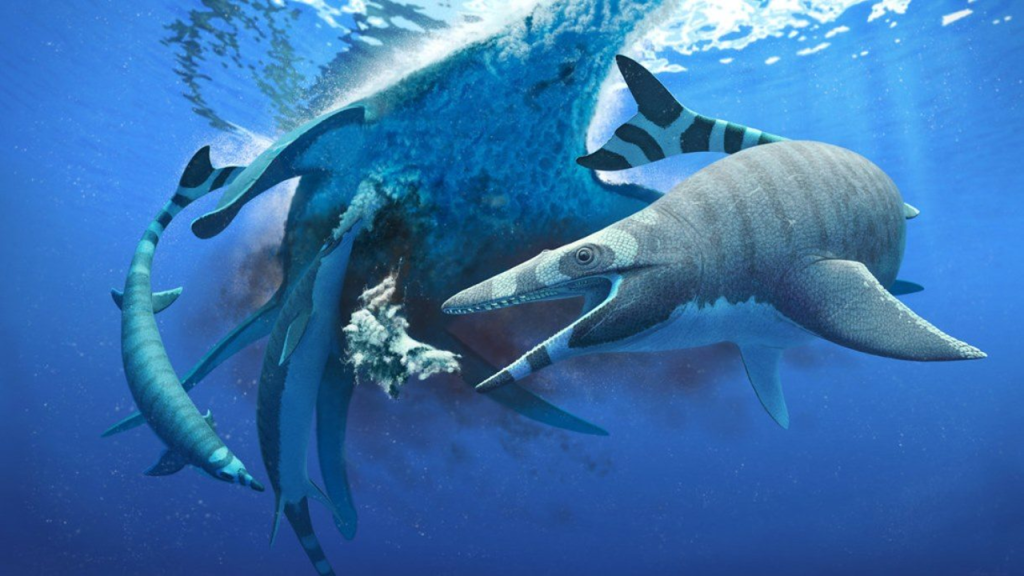
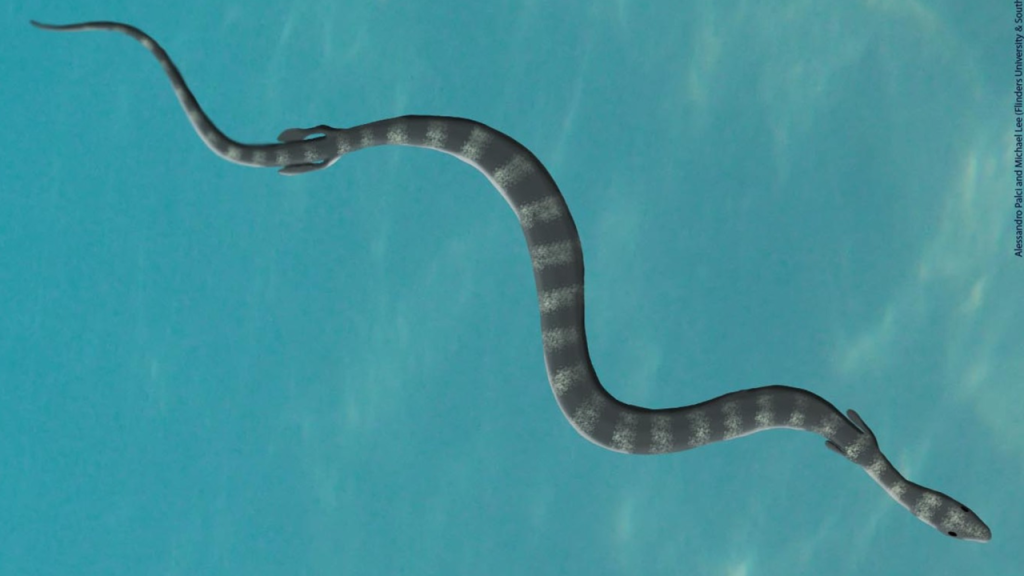
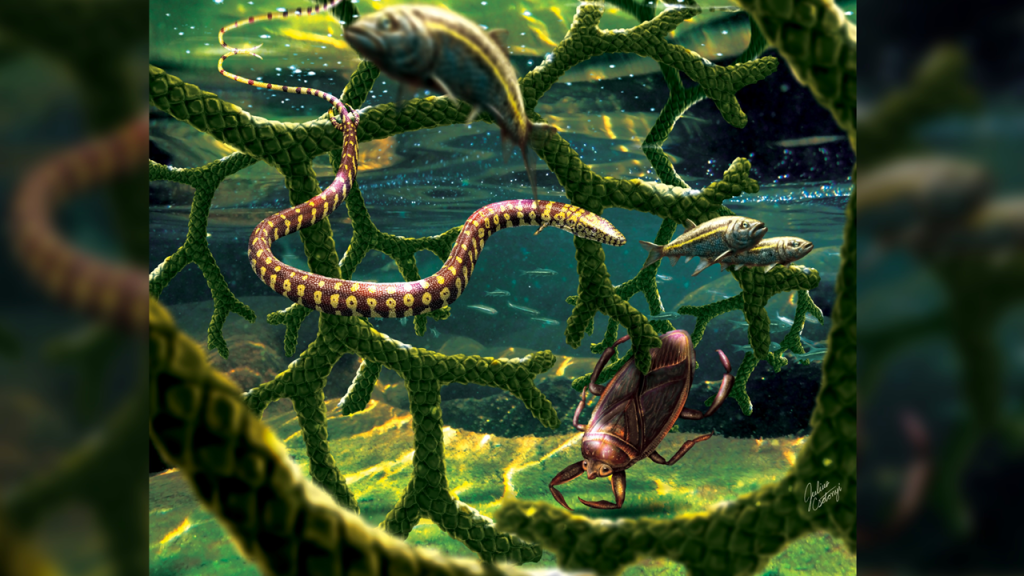
Dolichosauridae / Ophidiomorpha
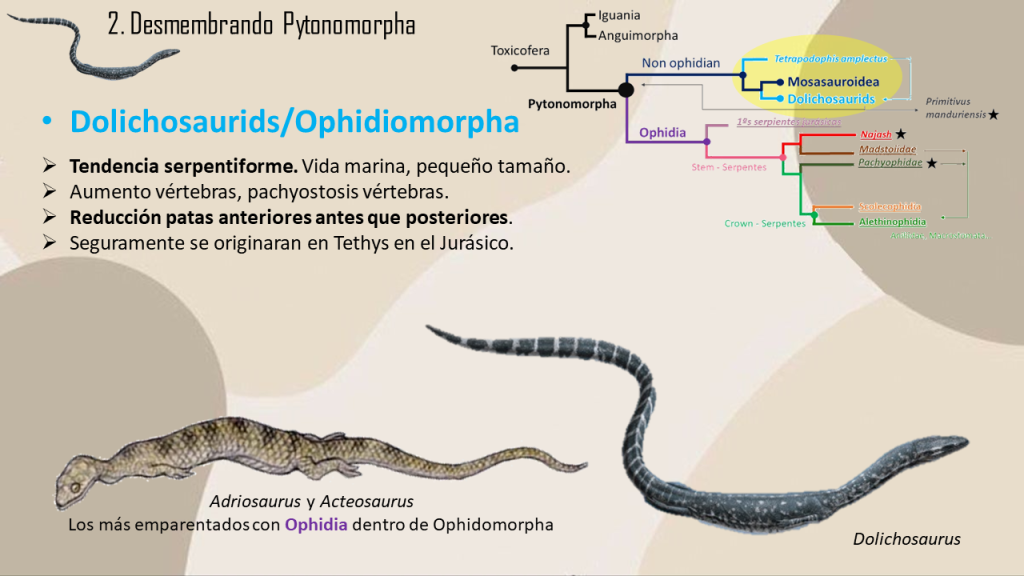
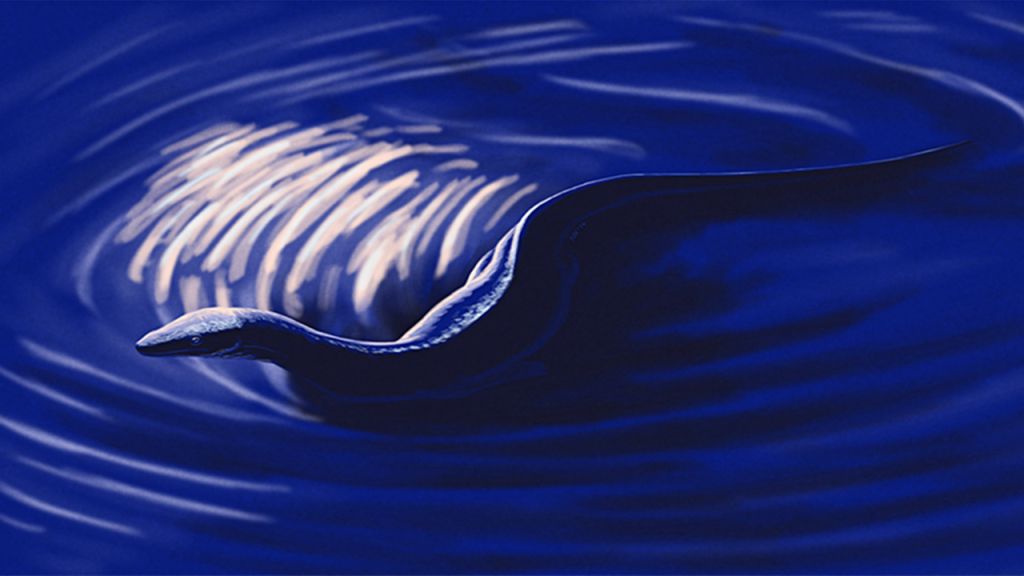
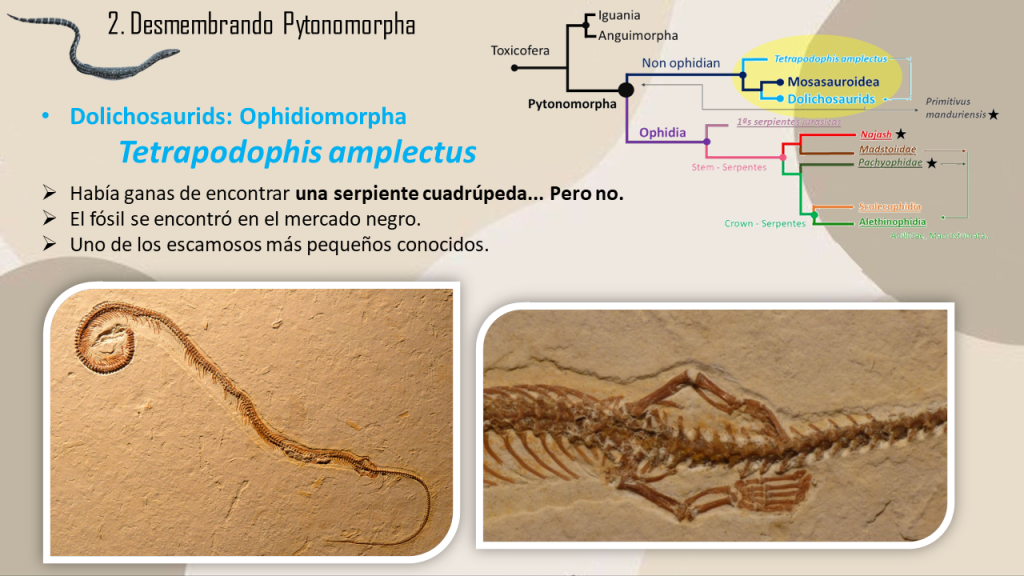
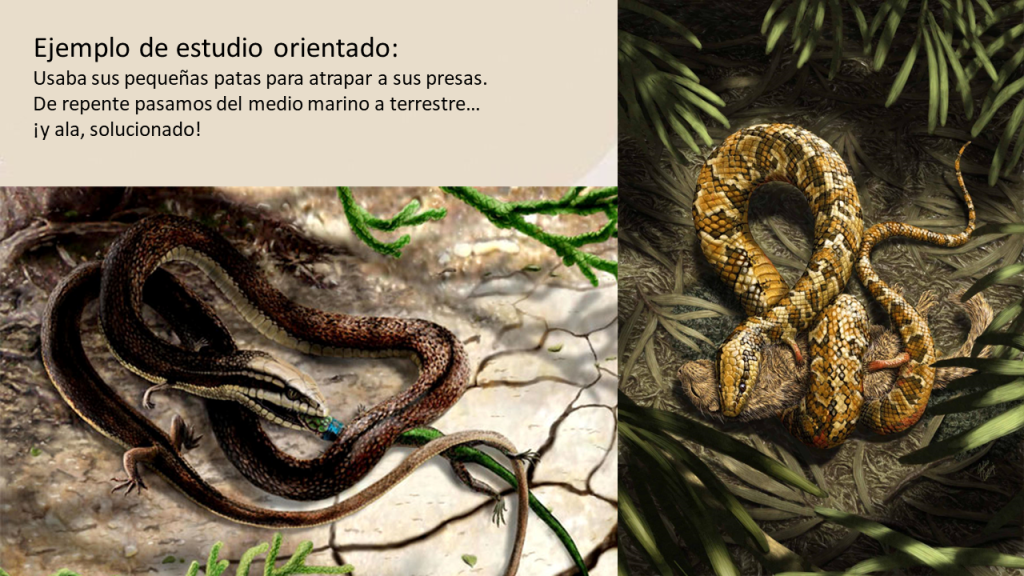
Tetrapodophis amplectus
Ophidia
Primeras serpientes jurásicas
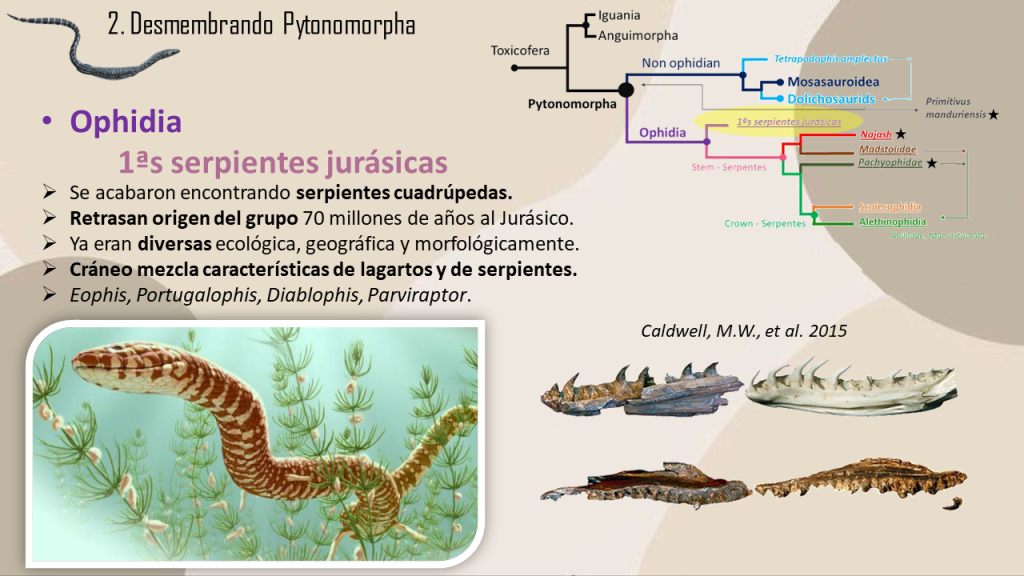
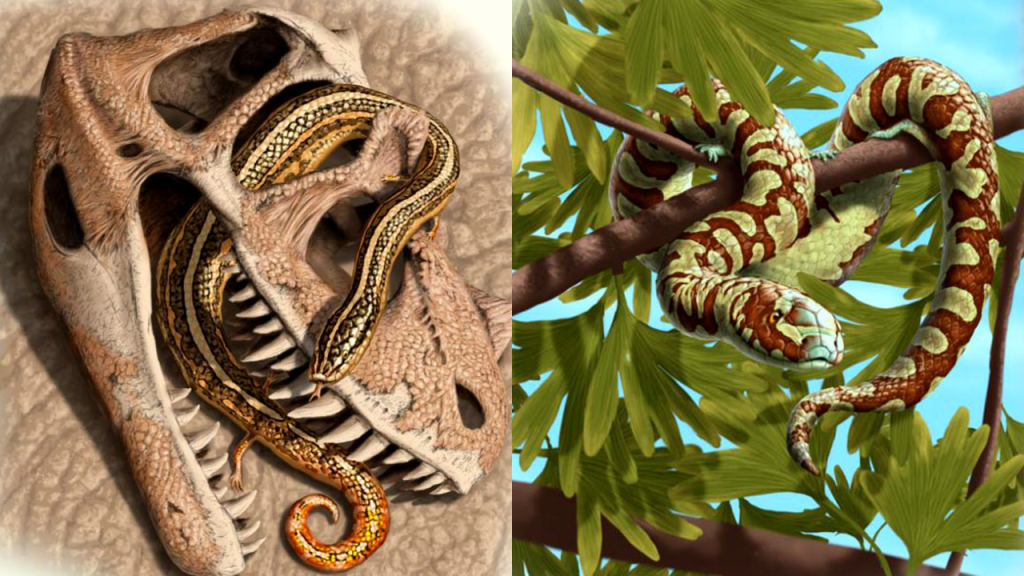
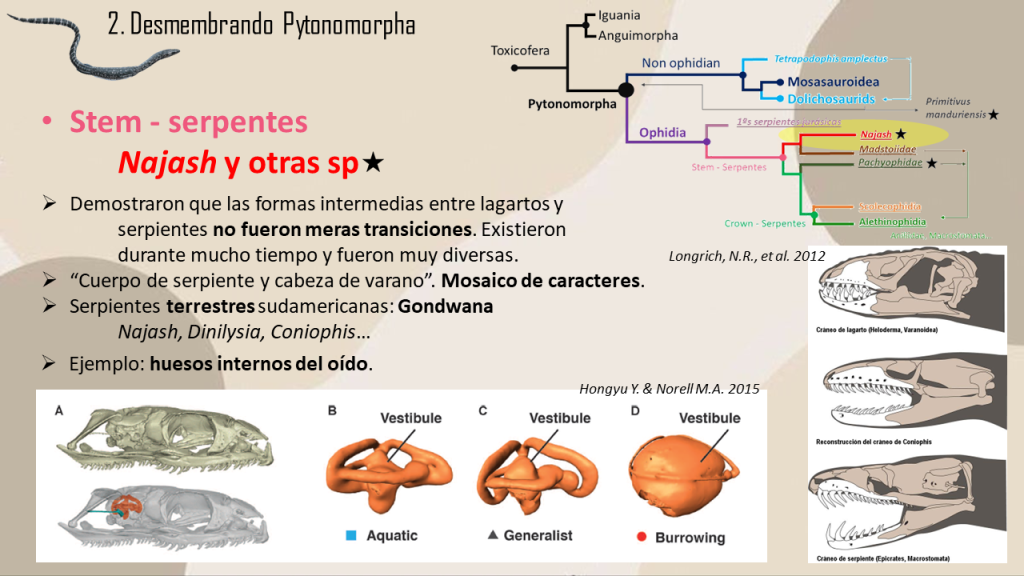
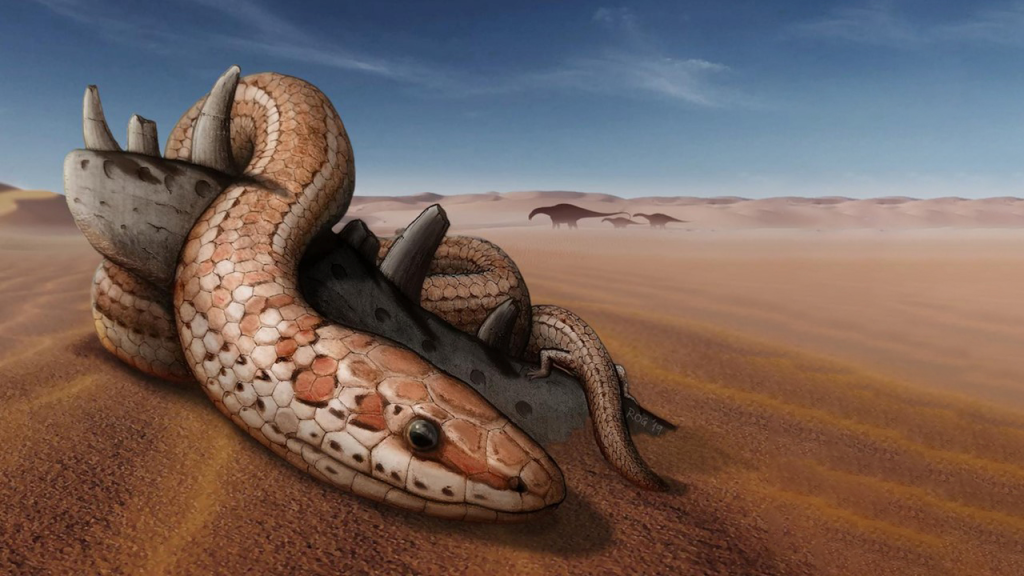
Stem-serpentes
Najash y otras especies
Madstoiidae
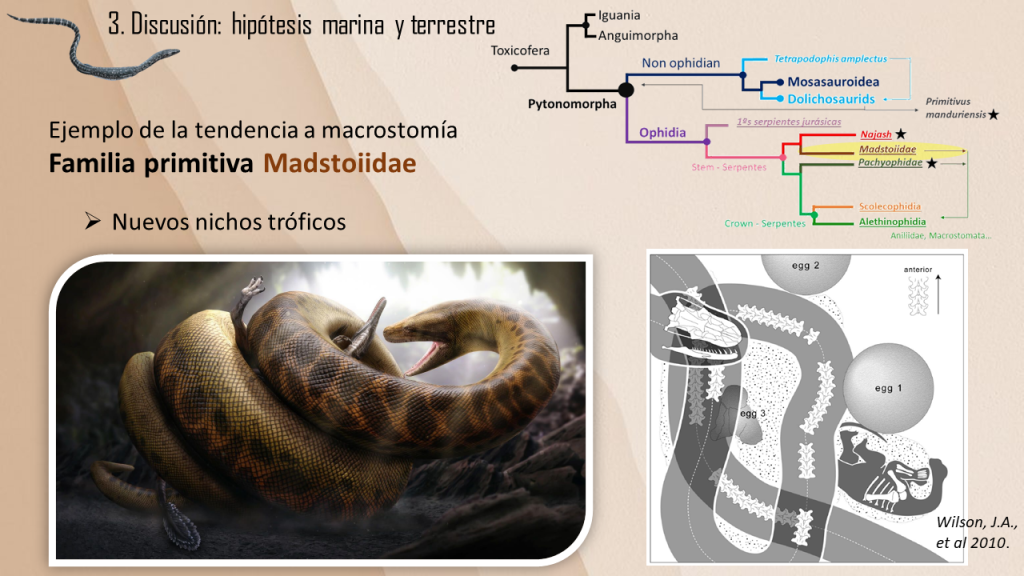
Serpentes
Pachyophidae
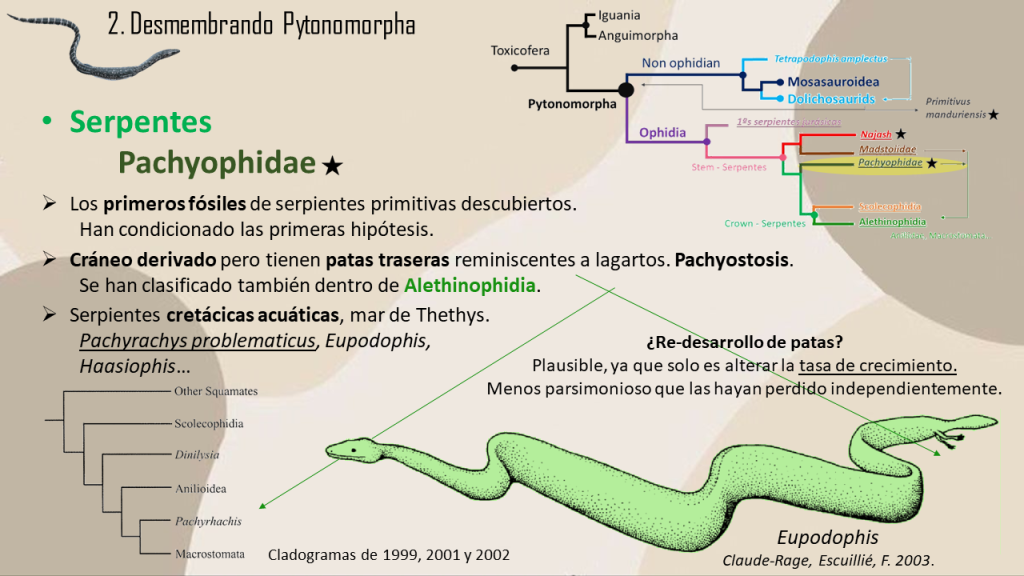
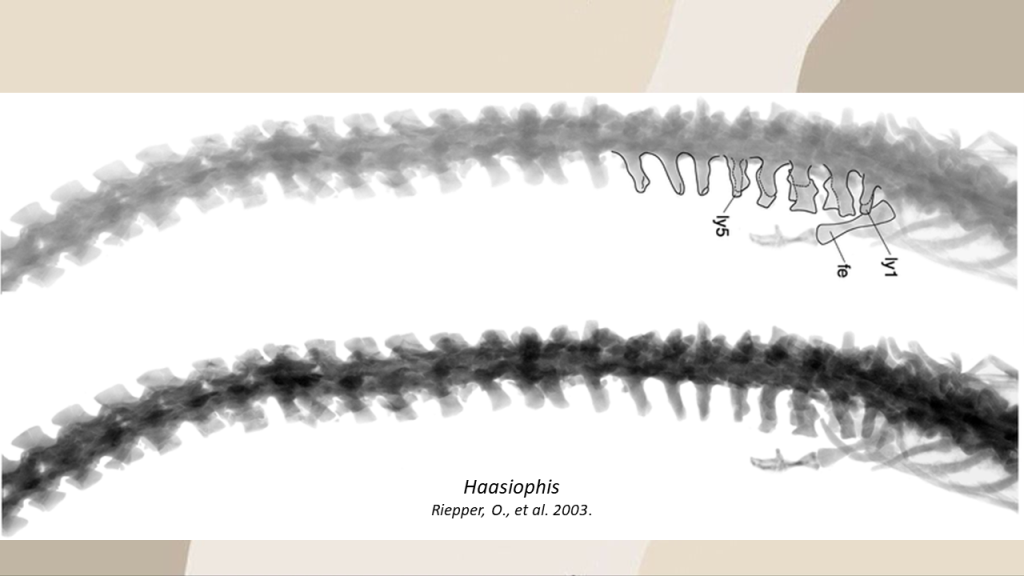
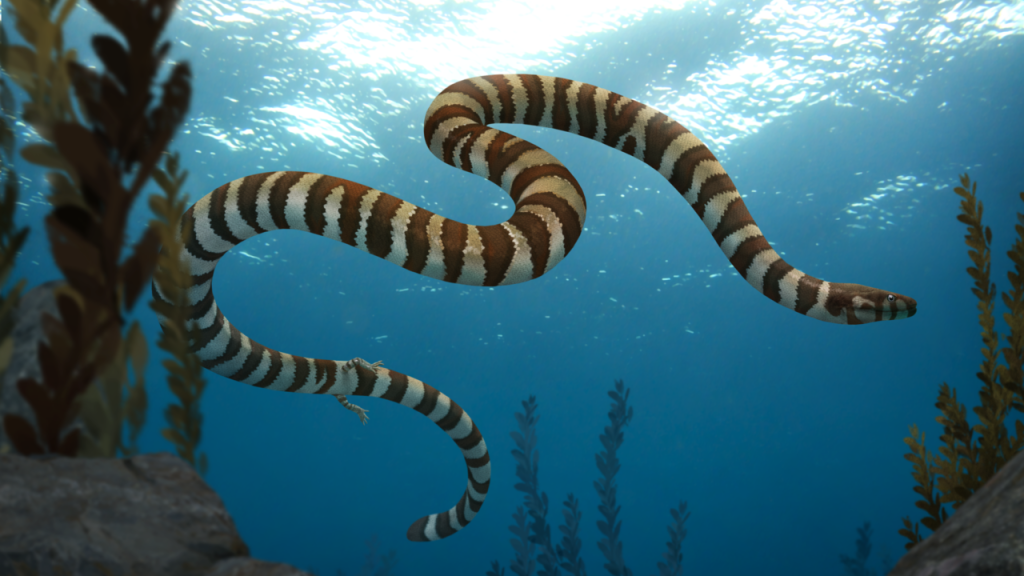
Crown serpentes
Scolecophidia
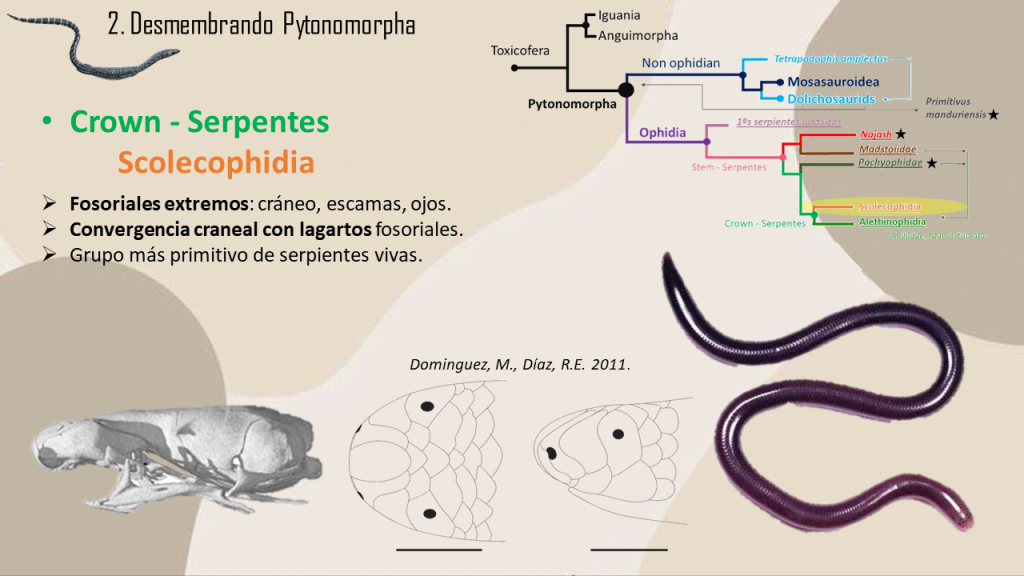
Alethinophidia (aniliidae, macrostomata)
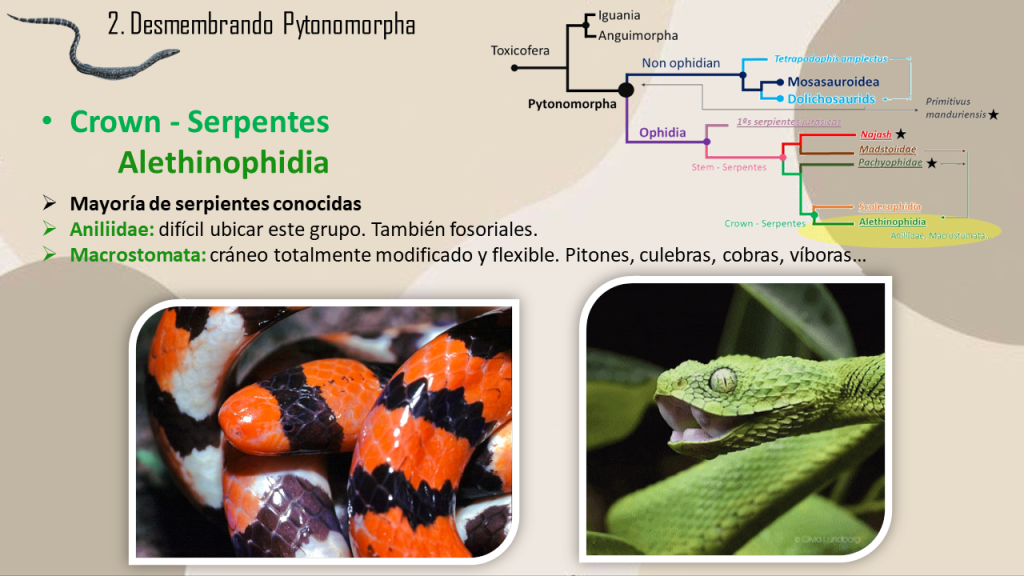
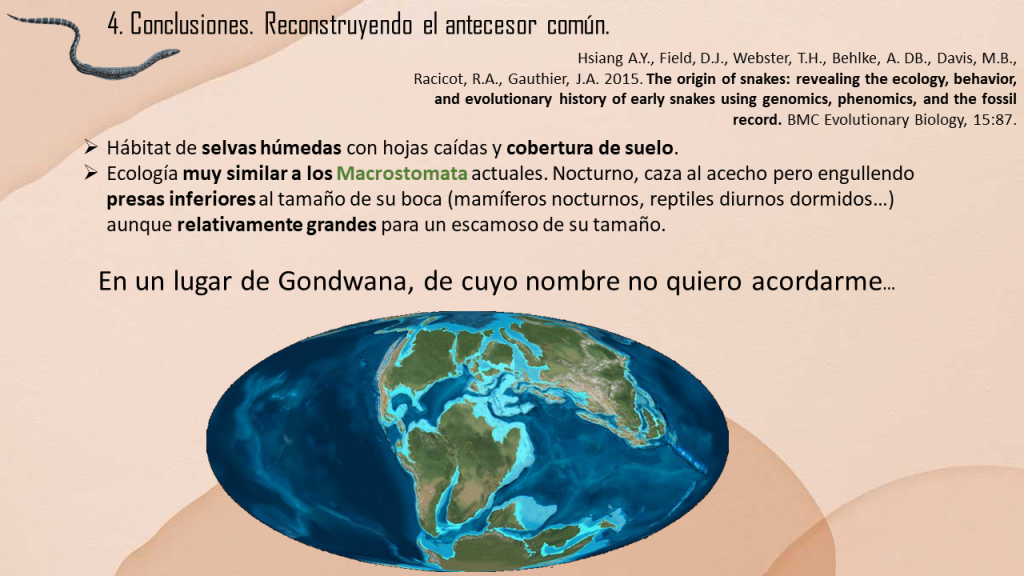
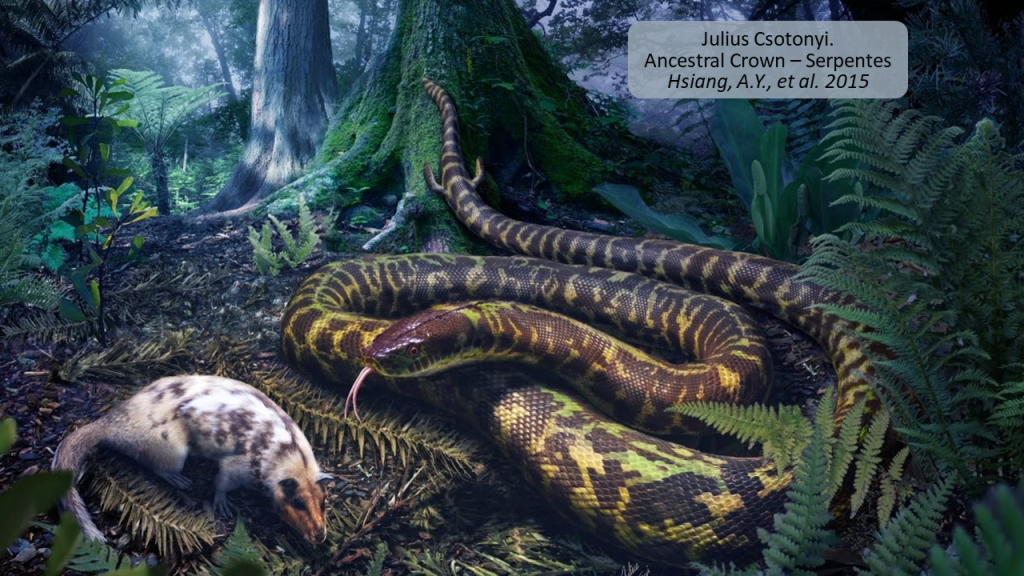
RECONSTRUCCIÓN DEL ANCESTRO COMÚN
BIBLIOGRAFÍA
Bardet, N., Houssaye, A., Rage, J. C., & Suberbiola, X. P., (2008). The Cenomanian-Turonian (Late Cretaceous) radiation of marine squamates (Reptilia): The role of the Mediterranean Tethys. Bulletin De La Societe Geologique De France. 179. 605-622. 10.2113/gssgfbull.179.6.605.
Caldwell, M., Nydam, R., Palci, A. & Apesteguía, S. (2015). The oldest known snakes from the Middle Jurassic-Lower Cretaceous provide insights on snake evolution. Nature Communications. 6. 10.1038/ncomms6996.
Campbell, M., Pierce, S. & Caldwell, M. (2019). Corrigendum: Spatiotemporal Distributions of Non-ophidian Ophidiomorphs, With Implications for Their Origin, Radiation, and Extinction. Frontiers in Earth Science. 7. 10.3389/feart.2019.00282.
Cyriac, V., & Kodandaramaiah, U. (2018). Digging their own macroevolutionary grave: Fossoriality as an evolutionary dead-end in snakes. Journal of Evolutionary Biology. 31. 10.1111/jeb.13248.
Dutchak, A. (2009). A Redescription of Aigialosaurus (= Opetiosaurus) Bucchichi (Kornhuber, 1901) (Squamata: Aigialosauridae) with Comments on Mosasauroid Systematics. Journal of Vertebrate Paleontology. 29. 437-452. 10.1671/039.029.0206.
Eo, T., Rieppel, O., Zaher, H., Polcyn, M., & Jacobs, L. (2000). A Fossil Snake with Limbs. Science. 287. 2010-2. 10.1126/science.287.5460.2010.
Estes, R., de Queiroz, K., y Gauthier, J. 1988. Phylogenetic relationships within Squamata. Phylogenetic relationships of the lizard families, 119-281.
Garberoglio, F., Gómez, R., Apesteguía, S., Caldwell, M., Sánchez, M., & Veiga, Gonzalo. (2019a). A new specimen with skull and vertebrae of Najash rionegrina (Lepidosauria: Ophidia) from the early Late Cretaceous of Patagonia. Journal of Systematic Palaeontology. 17. 10.1080/14772019.2018.1534288.
Garberoglio, F., Apesteguía, S., Simões, T., Palci, A., Gómez, R., Nydam, R., Larsson, H., Lee, M., & Caldwell, M. (2019b). New skulls and skeletons of the Cretaceous legged snake Najash, and the evolution of the modern snake body plan. Science Advances. 5. 1-8. 10.1126/sciadv.aax5833.
Herrera-Flores, J., Stubbs, T. & Benton, M. (2021). Ecomorphological diversification of squamates in the Cretaceous. Royal Society Open Science. 8. 201961. 10.1098/rsos.201961.
Hontecillas, D., Houssaye, A., Laplana, C., Sevilla, P., Arsuaga, J., Pérez-González, A., Baquedano, E. & Knoll, F. (2015). Reworked marine pythonomorph (Reptilia, Squamata) remains in Late Pleistocene cave deposits in central Spain. Cretaceous Research. 54.
Houssaye, A., Xu, F., Helfen, L., de Buffrénil, V., & Baumbach, T. & Tafforeau, P. (2011). Three-Dimensional Pelvis and Limb Anatomy of the Cenomanian Hind-Limbed Snake Eupodophis descouensi (Squamata, Ophidia) Revealed by Synchrotron-Radiation Computed Laminography. Journal of Vertebrate Paleontology. 31. 2-7. 10.1080/02724634.2011.539650.
Hsiang, A., Field, D., Webster, T., Behlke, A., Davis, M., Racicot, R. & Gauthier, J. (2015). The origin of snakes: Revealing the ecology, behavior, and evolutionary history of early snakes using genomics, phenomics, and the fossil record. BMC Evolutionary Biology. 15. 10.1186/s12862-015-0358-5.
Klein, C., Pisani, D., Field, D., Lakin, R., Wills, M., & Longrich, Ns. (2021). Evolution and dispersal of snakes across the Cretaceous-Paleogene mass extinction. Nature Communications. 12. 10.1038/s41467-021-25136-y.
Lee, M.S. & Caldwell, M. (1998). Anatomy and relationships of Pachyrhachis problematicus, a primitive snake with hindlimbs. Philosophical Transactions of the Royal Society of London. Series B: Biological Sciences. 353. 10.1098/rstb.1998.0308.
Lindgren, J. Caldwell, M., Konishi, T. & Chiappe, L. (2010). Convergent Evolution in Aquatic Tetrapods: Insights from an Exceptional Fossil Mosasaur. PloS one. 5. e11998. 10.1371/journal.pone.0011998.
Lindgren, J., Polcyn, M & Young, B. (2011). Landlubbers to leviathans: Evolution of swimming in mosasaurine mosasaurs. Paleobiology. 37. 445-469. 10.2307/23014733.
Longrich, N., Bhullar, B. & Gauthier, J. (2012). A transitional snake from the Late Cretaceous period of North America. Nature. 488. 205-8. 10.1038/nature11227.
Martill, D., Tischlinger, H. & Longrich, N. (2015). A four-legged snake from the Early Cretaceous of Gondwana. Science. 349. 416-9. 10.1126/science.aaa9208.
Nitschke, C., Hourston, M., Udyawer, V. & Sanders, K. (2018). Rates of population differentiation and speciation are decoupled in sea snakes. Biology Letters. 14. 20180563. 10.1098/rsbl.2018.0563.
Palci A. & Caldwell M. (2007) Vestigial forelimbs and axial elongation in a 95 million-year-old non-snake squamate, Journal of Vertebrate Paleontology, 27:1, 1-7, DOI: 10.1671/0272-4634(2007)27
Palci A. & Caldwell M. (2010) Redescription of Acteosaurus tommasinii von Meyer, 1860, and a discussion of evolutionary trends within the clade Ophidiomorpha, Journal of Vertebrate Paleontology, 30:1, 94-108, DOI: 10.1080/02724630903409139.
Palci, A., Hutchinson, M., Caldwell, M., Scanlon, J., & Lee, M. (2018). Palaeoecological inferences for the fossil Australian snakes Yurlunggur and Wonambi (Serpentes, Madtsoiidae). Royal Society Open Science. 5. 172012. 10.1098/rsos.172012.
Paparella, I., Palci, A.,Nicosia, U. & Caldwell, M. (2018). A new fossil marine lizard with soft tissues from the Late Cretaceous of southern Italy. Royal Society Open Science. 5. 10.1098/rsos.172411.
Rage, J. & Escuillié, F. (2003). The Cenomanian: Stage of hindlimbed snakes. Carnets de Géologie. 2003/01. 10.4267/2042/293.
Reeder, T., Townsend, T., Mulcahy, D., Noonan, B., & Wood Jr, P. & Sites, Jr, J. (2015). Integrated Analyses Resolve Conflicts over Squamate Reptile Phylogeny and Reveal Unexpected Placements for Fossil Taxa. PloS one. 10. e0118199. 10.1371/journal.pone.0118199.
Rieppel, O. & Zaher, H. (2000). The braincases of mosasaurs and Varanus, and the relationships of snakes. Zoological Journal of the Linnean Society. 129. 489-514. 10.1006/zjls.1999.0215.
Scanferla, A., Zaher, H., Novas, F., de Muizon, C. Céspedes, R. (2013). A New Snake Skull from the Paleocene of Bolivia Sheds Light on the Evolution of Macrostomatans. PloS one. 8. e57583. 10.1371/journal.pone.0057583.
Scanferla, A. & Bhullar, B. (2014). Postnatal Development of the Skull of Dinilysia patagonica (Squamata-Stem Serpentes). Anatomical record (Hoboken, N.J. : 2007). 297. 10.1002/ar.22862.
Scanferla A. (2016a). Postnatal ontogeny and the evolution of macrostomy in snakes. Royal Society open science, 3(11), 160612. https://doi.org/10.1098/rsos.160612
Scanferla, A. (2016b). Serpientes fósiles sudamericanas: piezas clave para comprender la evolución del grupo. Contribuciones del MACN.
Schineider Fachini, T., & Onary, S., & Palci, A., & Lee, M., & Bronzati, M., & Hsiou, A. (2020). Cretaceous Blind Snake from Brazil Fills Major Gap in Snake Evolution. iScience. 23. 10.1016/j.isci.2020.101834.
Silva, F., Fabre, A., Savriama, Y., Ollonen, J., Mahlow, K., Herrel, A., Müller, J., Di-Poï, N. (2018). The ecological origins of snakes as revealed by skull evolution. Nature Communications. 9. 10.1038/s41467-017-02788-3.
Simões, T & Pyron., R. (2021). The squamate tree of life. Bulletin of the Museum of Comparative Zoology. 163. 10.3099/0027-4100-163.2.47.
Streicher, J. (2017). Phylogenomic analyses of more than 4000 nuclear loci resolve the origin of snakes among lizard families. Biology Letters. 13. 20170393. 10.1098/rsbl.2017.0393.
Streicher, J. & Ruane, S. (2018). Phylogenomics of Snakes. 1-8. 10.1002/9780470015902.a0027476.
Vidal, N. & Hedges, S. (2004). Molecular evidence for a terrestrial origin of snakes. Proceedings. Biological sciences / The Royal Society. 271 Suppl 4. S226-9. 10.1098/rsbl.2003.0151.
Vidal, N., & Hedges, S. B. (2005). The phylogeny of squamate reptiles (lizards, snakes, and amphisbaenians) inferred from nine nuclear protein-coding genes. Comptes rendus biologies, 328(10-11), 1000–1008. https://doi.org/10.1016/j.crvi.2005.10.001
Vonk, F. & Richardson, M. (2008). Developmental biology. Serpent clocks tick faster. Nature. 454. 282-283. 10.1038/454282a.
Wilson, J., Mohabey, D., Peters, S. & Head, J. (2010). Predation upon Hatchling Dinosaurs by a New Snake from the Late Cretaceous of India. PLoS biology. 8. e1000322. 10.1371/journal.pbio.1000322.
Woltering, J. M., Vonk, F. J., Müller, H., Bardine, N., Tuduce, I. L., de Bakker, M. A., Knöchel, W., Sirbu, I. O., Durston, A. J., & Richardson, M. K. (2009). Axial patterning in snakes and caecilians: evidence for an alternative interpretation of the Hox code. Developmental biology, 332(1), 82–89. https://doi.org/10.1016/j.ydbio.2009.04.031
Yi, H. & Norell, M. (2015). The burrowing origin of modern snakes. Science Advances. 1. 10.1126/sciadv.1500743.
Zaher, H., & Rieppel, O. (1999). The phylogenetic relationships of Pachyrhachis problematicus, and the evolution of limblessness in snakes (Lepidosauria, Squamata). Comptes Rendus de l’Académie des Sciences – Series IIA – Earth and Planetary Science. 329. 831-837. 10.1016/S1251-8050(00)88639-5.